SONY XPERIA 1 vii

The Sony Xperia 1 VII is the kind of phone that feels like it was made for a completely different type of person. Not someone chasing the latest AI trick or the biggest camera bump on the back of their phone, but someone who actually cares about how a device feels to use every single day. While most flagship phones in 2026 are trying to be smarter, louder, and more attention-grabbing, Sony keeps doing something much quieter. It builds a phone that feels like a tool first and a product second.
That makes the Xperia 1 VII one of the strangest and, honestly, one of the most interesting flagships you can buy right now.
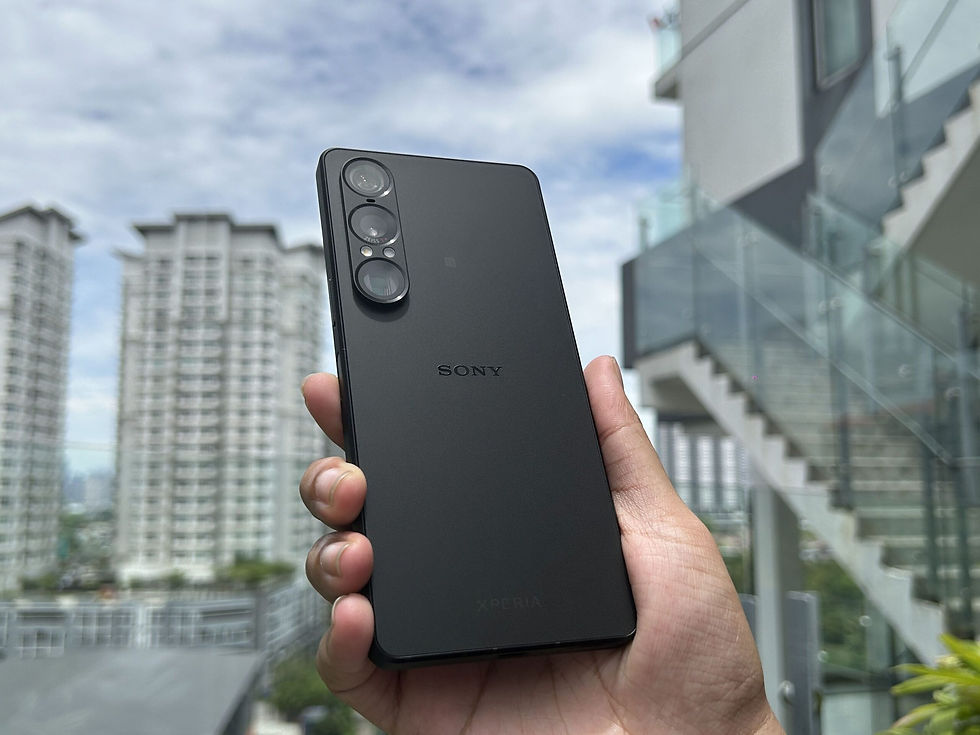
At first glance, it almost looks too simple. The design has barely changed, and if you are expecting some dramatic reinvention, you will not find it here. It is still tall, slim, and unapologetically rectangular. No giant circular camera module, no curved glass edges trying to look futuristic, no glossy design made for fingerprints. It looks clean, sharp, and a little serious.
Some people will call it boring.
I think that is exactly the point.
Sony has never really cared about making Xperia phones flashy. The Xperia 1 VII feels like it was designed by people who care more about usability than showroom appeal. The textured finish makes it easier to hold, the flat frame gives you better grip, and the dedicated shutter button on the side remains one of the best things any smartphone manufacturer still offers. It sounds small, but once you start using it, especially for photography, it feels ridiculous that more phones do not have one.
Even the front of the phone feels refreshingly stubborn. There is no notch, no punch-hole camera cutting into the display, just a full uninterrupted screen. In a world where nearly every flagship has accepted some kind of compromise here, Sony still refuses, and honestly, I love that.
The display itself is probably the most controversial part of the Xperia 1 VII. Sony has dropped the 4K screen from previous generations and replaced it with a 6.5-inch OLED panel running at Full HD+ resolution with a 120Hz refresh rate. On paper, that sounds like a step backwards, and technically, it is.

People noticed.
A lot of people were not happy.
But once you actually use it, the story feels a little different. Yes, the resolution is lower, but the screen still looks excellent. Sony’s BRAVIA tuning and Creator Mode make this one of the most natural-looking displays on any flagship phone. Colors are balanced, not exaggerated. Contrast looks clean. Watching films or editing photos feels closer to using a proper monitor than a phone screen designed to impress you for five seconds in a shop.
Samsung still wins if you want brightness that can fight the sun itself, but Sony is clearly chasing accuracy instead of spectacle.
That pretty much sums up the whole phone.
Performance is handled by Qualcomm’s Snapdragon 8 Elite chip with either 12GB or 16GB of RAM, so yes, this is absolutely a proper flagship. It is fast, and more importantly, it stays fast. Apps open instantly, multitasking feels effortless, and the phone handles longer workloads like photo editing or 4K video recording without suddenly feeling like it is trying to melt itself.
Sony has never been obsessed with benchmark bragging rights, and honestly, that is refreshing. The Xperia 1 VII feels tuned for real life, not YouTube thumbnail comparisons.
But let’s be honest, nobody looks at an Xperia and asks about Geekbench scores first.
They ask about the camera.
And that is where Sony continues to do things differently.
The Xperia 1 VII has a triple camera setup with a 48MP main sensor, a much improved 48MP ultra-wide, and a 12MP telephoto lens with continuous optical zoom from 3.5x to 7.1x. That zoom system is still one of the coolest things in smartphones because it feels practical rather than flashy. Instead of just shouting about 100x zoom like some brands, Sony focuses on giving you smooth, usable zoom across the focal lengths you will actually use.
But the bigger difference is how the phone takes photos.
Most flagship phones today are basically tiny Photoshop machines. They brighten everything, smooth everything, sharpen everything, and make every sunset look like it belongs in a tourism ad. Sony does not do that. Photos from the Xperia feel more natural, sometimes even a little understated.
At first, some people might think they look less impressive.
Then you realize they look more real.
Shadows stay shadows. Skin tones look like actual people. Colors are not trying to punch you in the face. It feels less like the phone is making creative decisions for you and more like it is just giving you the shot.
And if you like photography, that matters.
Sony’s camera apps also feel like they were built by people who actually use cameras. Manual controls for shutter speed, ISO, white balance, focus, and exposure are all easy to access. It feels closer to using a mirrorless camera than a normal smartphone. If you know what you are doing, the Xperia rewards you for it.
If you want your phone to do everything automatically, the Pixel will probably make you happier.
That is not a flaw. It is just a different philosophy.
Video is also excellent here. You get 4K recording up to 120fps, strong autofocus, and new AI-assisted framing features that help keep subjects properly tracked. Sony understands creators because, frankly, it already makes half the cameras creators use.
Battery life is solid. The 5000mAh battery easily lasts a full day, and lighter users can comfortably stretch it further. The weak point is charging speed. At around 30W wired charging, it feels slow compared to a lot of the competition. Some brands are charging twice as fast, sometimes more.
Sony’s argument is battery health and long-term longevity, which makes sense, but it is still one of the few areas where the Xperia feels clearly behind.
Then we get to the part that makes this phone feel almost rebellious.
It still has a headphone jack.
It still has microSD card support.
It still has front-facing stereo speakers.
It still has a dedicated shutter button.
It still gives you a full display with no hole punched through it.

That should not feel special in a flagship phone, but somehow it does.
These are features most companies removed and then tried to convince everyone they were unnecessary. Sony just kept them. Not because it is nostalgic, but because they are actually useful.
The audio experience deserves special mention too. Whether you are using wired headphones or good wireless ones with LDAC, the Xperia sounds fantastic. There is depth, detail, and a level of tuning that reminds you Sony still knows audio better than almost anyone else in this space.
Software follows the same idea. Android 15 is clean, simple, and close to stock. There is very little bloat, very little nonsense, and thankfully, very little forced AI trying to organize your life for you. Some people will find that too plain. Others will find it perfect.
And honestly, that is the Xperia 1 VII in one sentence.
It is not trying to please everyone.
Compared to the Samsung Galaxy S25 Ultra, it loses in AI features and charging speed. Compared to the iPhone 16 Pro, it loses in ecosystem polish and app optimization. Compared to the Pixel 9 Pro, it loses in point-and-shoot simplicity.
But it wins in something much harder to explain.
It feels like it was made on purpose.
Every decision here feels intentional. The camera system, the display tuning, the audio hardware, even the decision to keep expandable storage. It all points toward a specific kind of user.
Not everyone.
Just the right one.
For most people, there are easier phones to recommend. Phones that are more automatic, more polished at first glance, and more obviously impressive.
But for the right person, the Xperia 1 VII is not just another flagship.
It is the one they keep for years because nothing else feels quite right after it.
It is a camera, a Walkman, and a cinema display pretending to be a smartphone.
And in a market full of phones trying to be everything, there is something really refreshing about one that knows exactly what it wants to be.
Rating: 4/5
The Xperia 1 VII is not the best flagship if you judge it by the usual checklist. It does not have the brightest display, the fastest charging, or the smartest AI features. But that misses the point completely.
This phone is about control, character, and experience.
It loses points for the slower charging and the move away from 4K, but gains them back with one of the best camera systems for photographers, unique hardware features that nobody else offers, and a design philosophy that feels rare in modern smartphones.
It is not the obvious choice. That is exactly why some people will love it.


Comments